
Reformer Pilates VS Mat Pilates
If you’ve ever looked at the Pilates timetable and wondered, “Should I book reformer or mat?”, you’re not alone. It’s one of the most frequently asked questions I receive at ALIGN Pilates Club. The good news? There’s no wrong answer. Both styles are rooted in the same Pilates principles and both deliver incredible benefits; they do it in slightly different ways.
Let’s break it down.
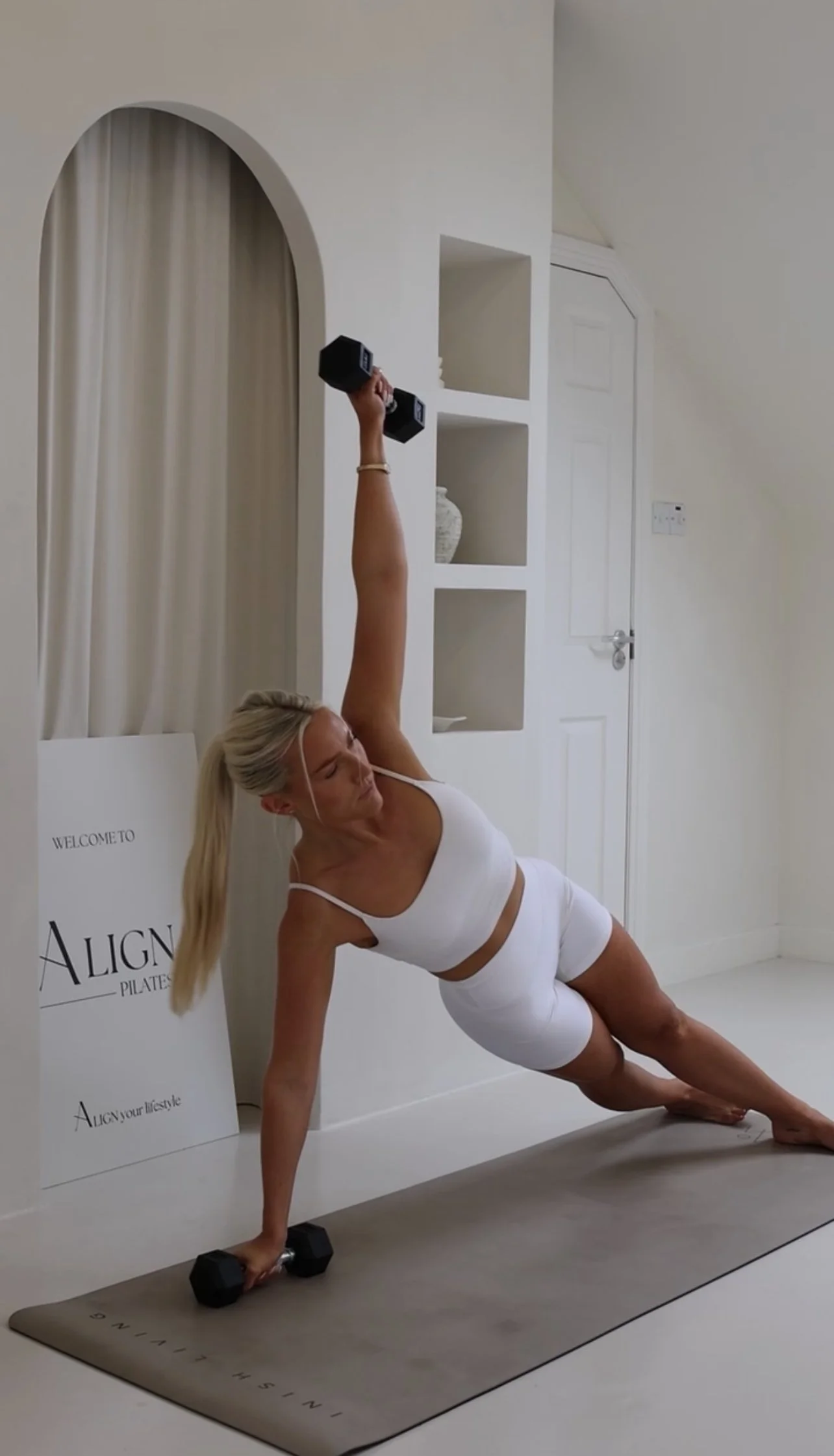
Mat Pilates
Mat Pilates is where Pilates began, and my all-time favourite. It’s practised on the floor using your own bodyweight as resistance, sometimes with small props like bands, hand weights or balls to add variety. Because there’s no machine to support you, mat work asks you to truly connect to your core, focus on control, and move with intention. It’s simple, effective, and surprisingly challenging, in that quiet, “why are my abs shaking?” kind of way.
Mat Pilates is often slower and more focused. You’re working close to the ground, learning how to stabilise, balance and move efficiently. It’s brilliant for building a strong foundation, improving posture, and understanding how your body really moves. Many people love mat Pilates because it strips everything back, no distractions, just you and your breath.
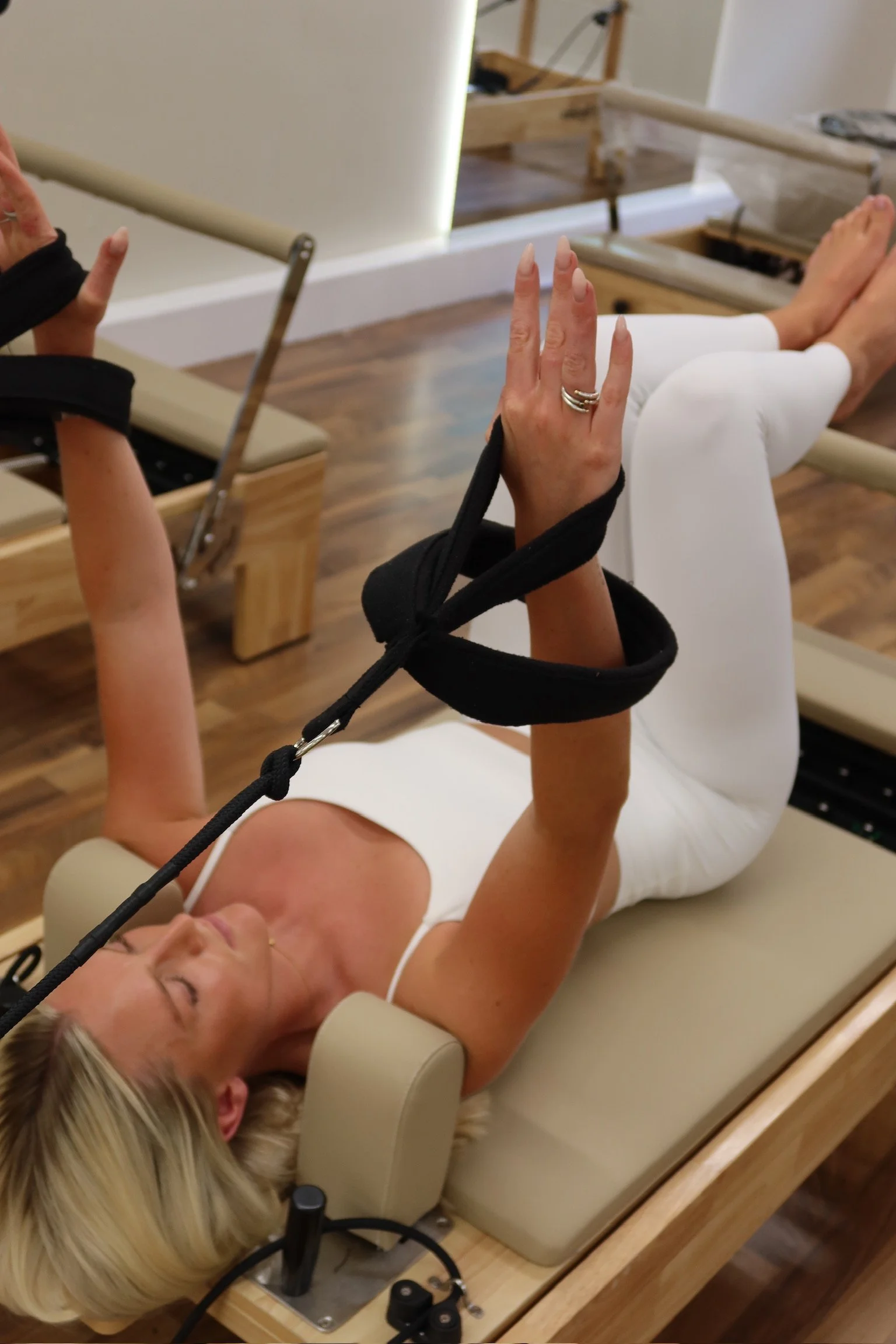
Reformer Pilates
Reformer Pilates, on the other hand, uses the reformer machine, a sliding carriage with springs, straps and pulleys that create both resistance and support. The reformer allows for a huge range of movement patterns and intensities, making classes feel dynamic, creative and endlessly varied. One minute you’re lengthening, the next you’re strengthening, all while staying low-impact and joint-friendly.
Reformer Pilates tends to feel more athletic and fun. The springs challenge your muscles in new ways, helping you build strength while still moving fluidly. It’s especially great if you enjoy variety or want support during certain exercises. The reformer can assist where needed or dial up the burn when you’re ready for it.
The Benefits: Mat Pilates vs. Reformer Pilates
While mat and reformer Pilates share the same foundations of breath, control, precision and flow. They challenge the body in very different ways. Understanding how each one works can help you choose the class that best supports your goals, or if you're like me, you’ll like doing both
Mat Pilates relies entirely on your own bodyweight. Without springs or straps to assist you, your muscles have to work harder to stabilise and control every movement. This makes mat Pilates incredibly effective for developing deep core strength, improving posture, and building true body awareness. You learn how to support your spine, move with intention, and engage the right muscles. These are skills that carry over into everyday life, sport, and other workouts.
Because mat Pilates keeps you close to the floor, it also encourages focus and precision. Small movements create big results, helping to improve flexibility, coordination and balance over time. It’s an especially powerful tool for beginners, as it teaches the fundamentals of Pilates in its purest form, but don’t be fooled, advanced mat work can be seriously challenging.
Reformer Pilates, by contrast, introduces resistance through springs. This allows you to strengthen muscles in a controlled, progressive way, making it easier to build overall strength and muscle tone. The reformer also supports the body in certain positions, which can reduce pressure on the joints and allow for a greater range of motion, which is ideal for anyone returning from injury, managing joint sensitivity, or simply wanting more support during challenging exercises.
The reformer’s versatility means you can target specific muscle groups more precisely. Leg work, glute strengthening, upper-body conditioning and spinal mobility can all be intensified or modified by adjusting the springs. This makes reformer Pilates highly adaptable, whether you want a gentle, restorative session or a full-body burn.
One of the biggest differences between the two styles is how resistance is created. In mat Pilates, gravity is your main challenge as your body must work to lift, hold and stabilise itself. In reformer Pilates, resistance comes from the springs, which challenge the muscles both as you push and as you control the return. This often leads to greater muscular endurance and strength over time.
Another key difference is support. Mat Pilates requires you to support your own body throughout each movement, which is excellent for developing control and stability. Reformer Pilates, on the other hand, can offer assistance when needed, making certain exercises more accessible, while still allowing you to increase intensity when you’re ready.